
Fresh ideas for your home
How to Set Up a Clean, Organized Study Space That Helps Kids Focus
Create a productive home learning zone. Our kids study space organization tips help improve focus and keep your home healthy and tidy.
Published · Updated
5 minutes of estimated reading time
We have all seen the struggle: a child trying to solve math problems on a dining table covered in breakfast crumbs or a desk buried under old art projects and forgotten snacks. For families in Maryland and Northern Virginia, finding the right kids study space organization strategy is the first step toward a more peaceful and productive afternoon routine. While every home has different layout limitations, creating a dedicated zone helps signal to a child’s brain that it is time to shift from play to learning.
Beyond just looking tidy, a well-managed area supports your child’s focus and significantly reduces the mental load on busy parents managing a household. Maintaining this environment includes regular care of surfaces to keep the home healthy for everyone. By prioritizing kids study space organization, you ensure that their learning environment remains an inviting and distraction-free corner where they can truly excel without the clutter getting in the way.
Request a cleaning estimate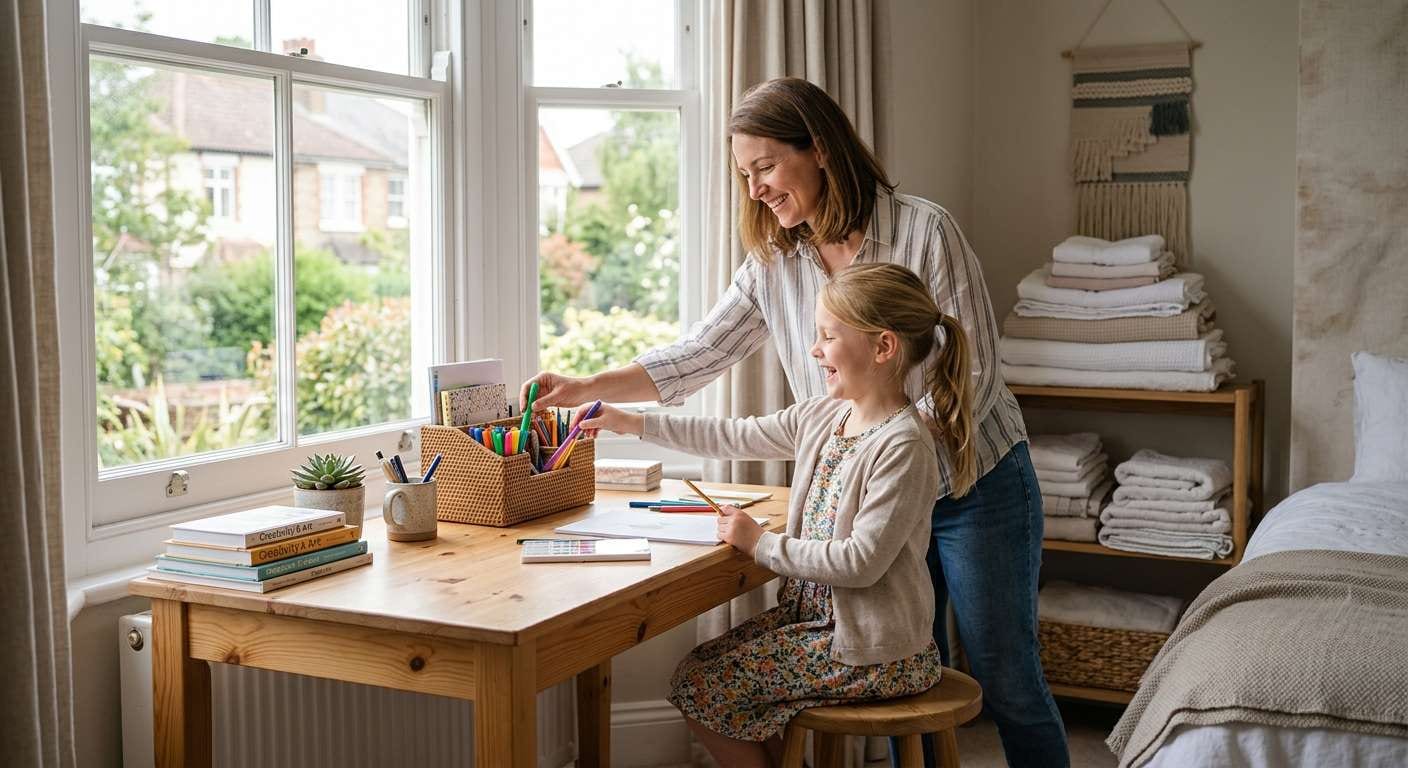
Finding the Ideal Spot for Maximum Concentration
Now that we know why a dedicated space matters, let’s look at the best places to set it up within your existing home layout. You do not need a separate room or a custom-built home office to create a functional zone. Often, a quiet corner of a bedroom or a low-traffic area in a shared family room works perfectly as long as it is removed from the main flow of household chaos.
When choosing a location, consider the impact of natural light on your child’s energy levels. Placing a desk near a window can boost mood and alertness, though it is usually best to position the desk side-on to the window to prevent glare on screens or direct distractions from outside. If the only available space is in a busy room, facing the desk toward a wall can create a visual “cubicle” effect that helps the child stay in the zone.
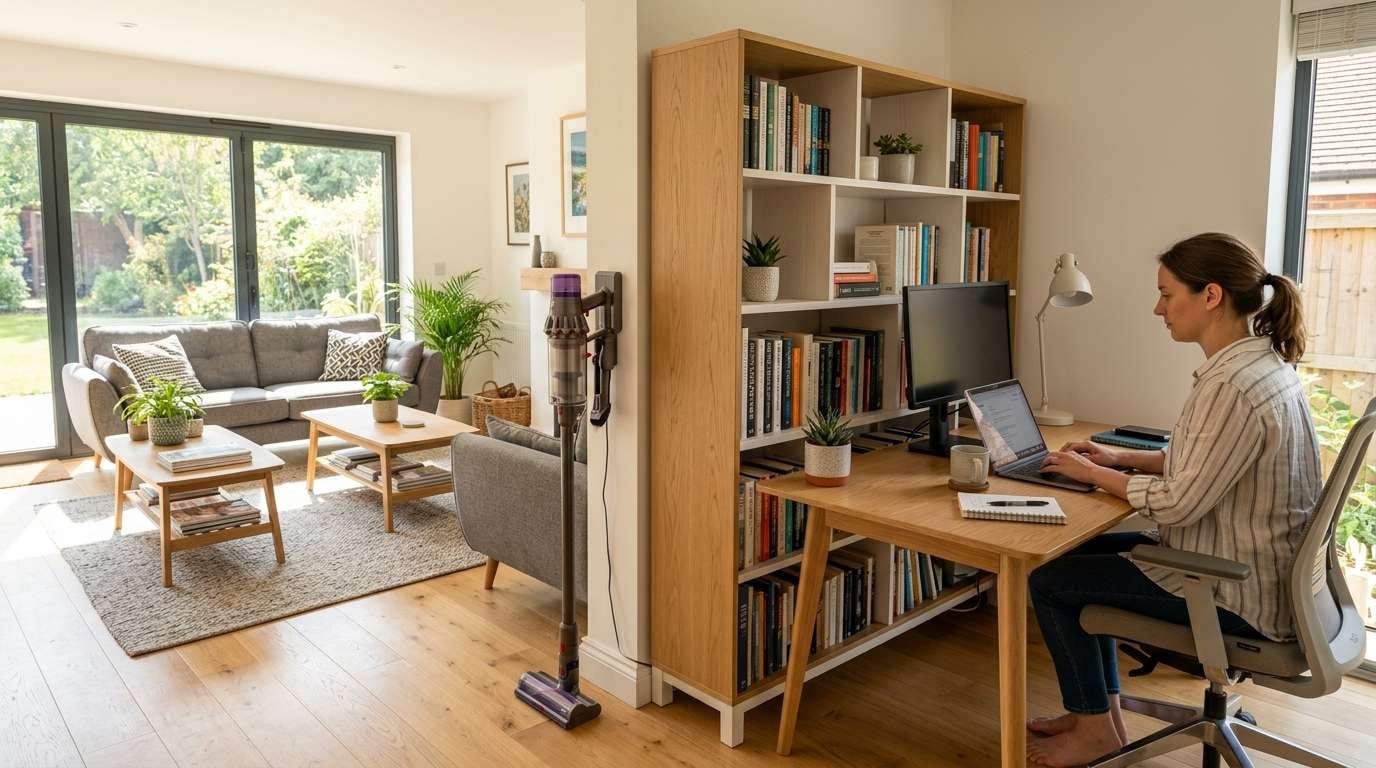
Reducing visual noise is just as important as managing sound. If you are setting up in a shared space, a simple room divider or even a tall bookshelf can act as a physical boundary between the “classroom” and the “living room.” This clear separation helps kids understand that when they are behind that boundary, their focus belongs to their schoolwork rather than the television or the kitchen activity.
Practical Kids Study Space Organization for School Supplies
Once you have the right spot, the next hurdle is the “stuff” that tends to pile up quickly. School supplies like markers, rulers, and notebooks can easily overwhelm a small desk if they don’t have a specific home. Strategic **kids study space organization** relies on keeping the desktop clear for the task at hand while keeping necessary tools within arm’s reach.
To maximize a small footprint, look at vertical storage solutions. Floating shelves or pegboards are excellent for keeping jars of pencils and craft supplies off the work surface. This keeps the desk feeling spacious and less intimidating for a child who might already feel overwhelmed by their homework. We recommend a few simple storage habits to keep the system working:
- One-in-one-out: Only keep the current set of markers or pens being used on the desk to prevent a mountain of dried-out supplies.
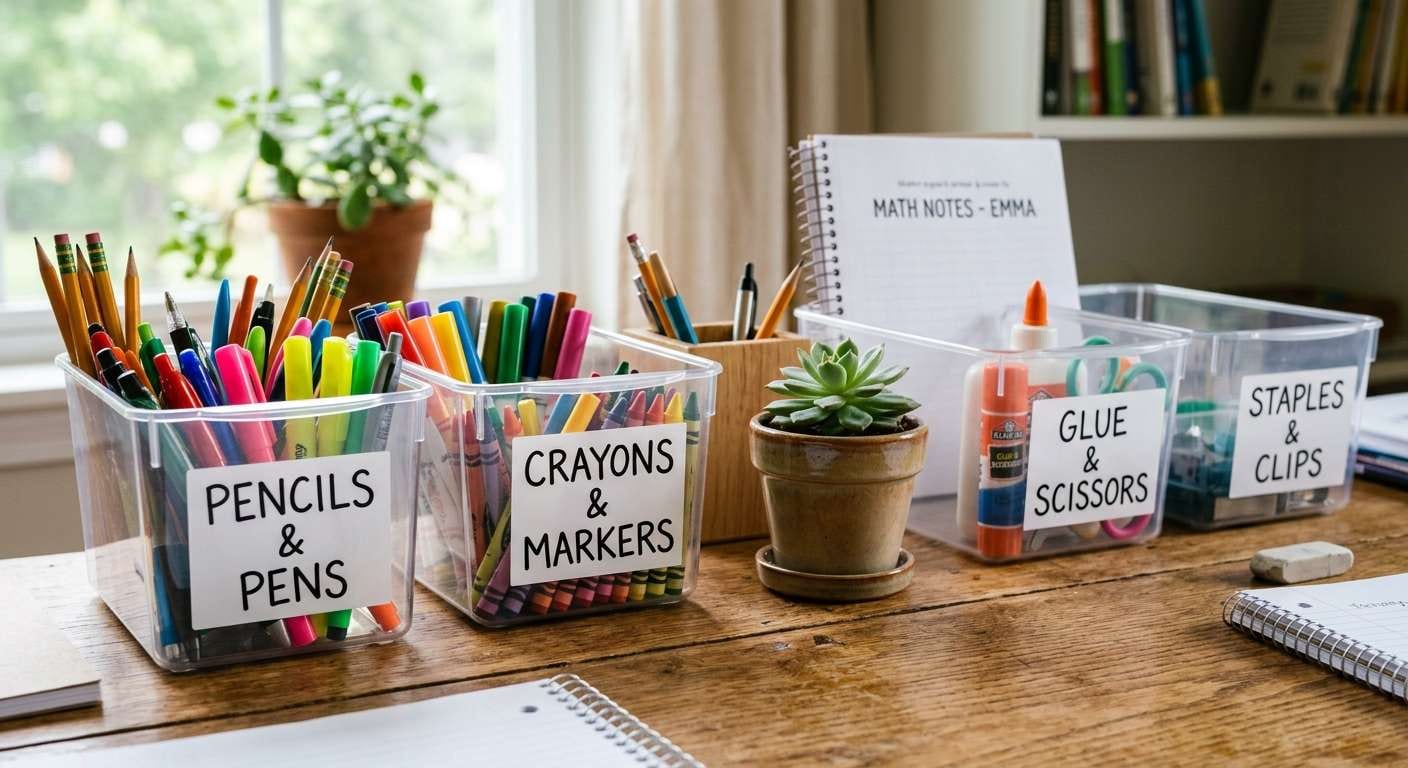
- Labeling: Use clear bins with large labels so your child knows exactly where their glue sticks and scissors belong.
- Assigned bins: Give each subject its own folder or bin to keep math worksheets from getting buried under history projects.
Involving your children in the labeling and sorting process is a great way to build a sense of ownership over the space. When kids help choose where things go, they are much more likely to participate in the cleanup process at the end of the day. This simple involvement transforms the desk from a place they are told to sit into a workstation they are proud to maintain.
Keeping the Zone Healthy and Germ Free
Organization is half the battle; the other half is keeping the space healthy for daily use. Desks are high-touch areas that can harbor dust and germs, especially during the busy school year. At Fresh Home Cleaning, we believe a healthier community starts at this desk, and a quick weekly sanitization routine can prevent the spread of common household illnesses among your family members.
Set aside a few minutes each week to wipe down the most frequently touched items. Pay special attention to computer keyboards, mice, and the edge of the desk where arms rest. Using non-toxic, child-safe cleaners ensures that their skin isn’t irritated by harsh chemicals while they work. A simple microfiber cloth and a gentle botanical cleaner are usually all you need to keep the area sparkling and safe.
Managing trash and food wrappers is also vital for both hygiene and focus. It is very common for kids to want a snack while they study, but forgotten wrappers can lead to odors or even attract pests. Encourage a “clear desk” policy regarding food by ensuring a small trash can is nearby and emptied regularly. This prevents the buildup of clutter that can make a child feel restless or distracted by their environment.
NEED HELP? GET A FREE QUOTE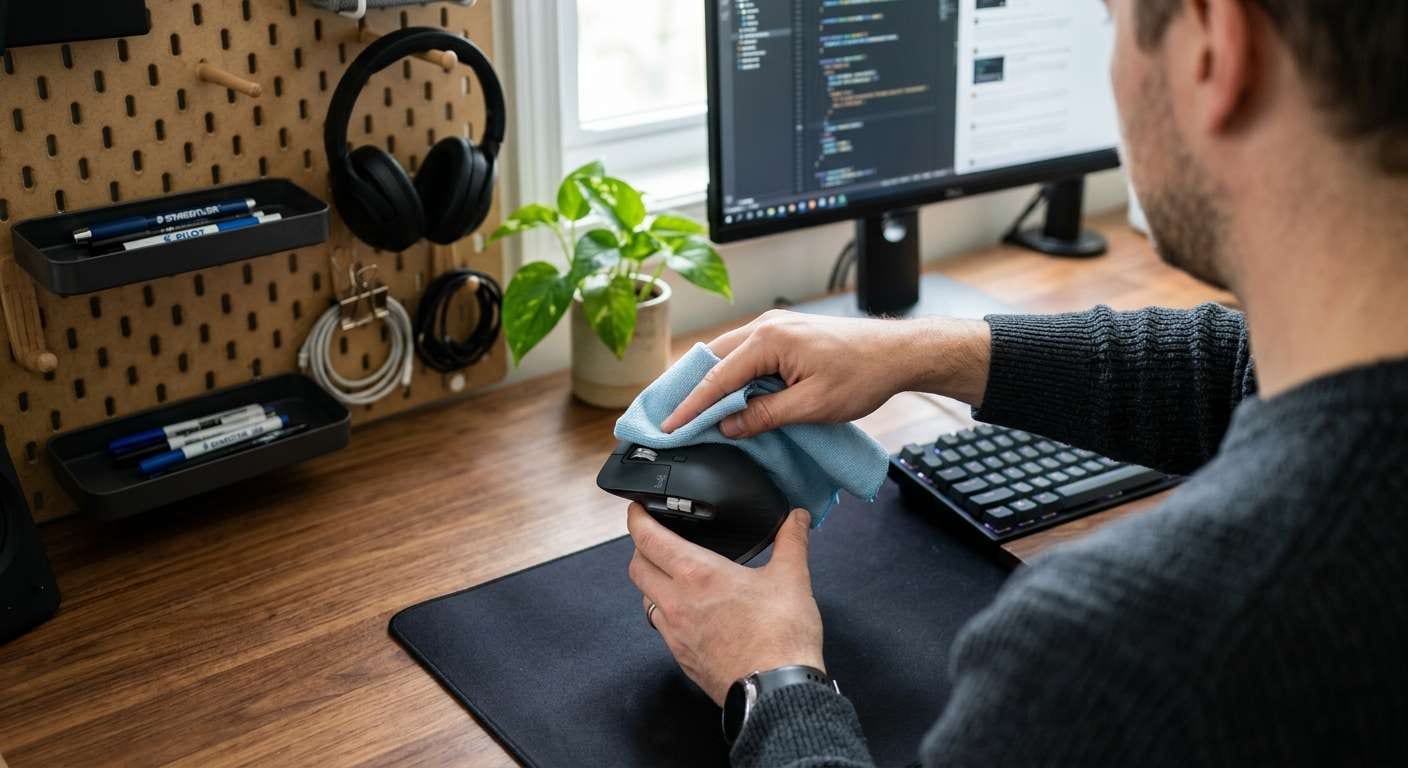
Managing Distractions with a Minimalist Setup
Even a clean desk can be distracting if it is covered in toys, gadgets, or items from other parts of the house. To help your child maintain their concentration, implement the “Top of the Desk” rule. This means that only the items required for the current task—such as a specific textbook, a notebook, and a laptop—should be on the surface at any given time.
Cables and cords are another common source of both physical and visual clutter. Use simple cable clips or even Velcro ties to bundle computer chargers and lamp cords together. When the space looks streamlined and tidy, it creates a calmer psychological environment for the learner. A tangle of wires can often lead to a sense of “busy-ness” that makes it harder for a child to settle down and start their work.
Establishing clear boundaries between “play items” and “study tools” is essential. While it is tempting to let a favorite action figure sit on the desk for company, it can quickly become a distraction during a difficult assignment. We find that keeping toys in a separate bin across the room helps maintain the desk as a zone for focused effort, reinforcing that once the work is done, the play can begin in earnest.
Ergonomics and Comfort for Growing Learners
Beyond the clutter, how your child sits affects how long they can stay on task. Poor posture can lead to fatigue and restlessness, which parents often mistake for a lack of focus. You do not need to buy an expensive ergonomic chair to make a difference; simple adjustments using items you already have around the house can significantly improve their comfort and endurance.
Check that your child’s feet are supported rather than dangling, as this takes the strain off their lower back. If the chair is too high, a sturdy box or a few old textbooks can serve as a makeshift footrest. Additionally, try to position their laptop or monitor so the top of the screen is at eye level. If necessary, use a laptop stand or a stack of paper to raise the device, which prevents them from hunching over and straining their neck.
While minimalism is key for focus, adding one or two small comfort items can make the space feel more inviting. A small, low-maintenance plant like a succulent or a soft seat cushion can make the area feel personalized without becoming a distraction. The goal is to create a space where they feel comfortable enough to stay seated, but structured enough to remain productive throughout their study session.
The Friday Afternoon Reset for a Stress Free Monday
The best way to ensure this stays organized is to build a simple habit that prevents the clutter from ever getting out of hand. We recommend a “Friday Afternoon Reset,” which takes less than five minutes but pays off immensely when Monday morning rolls around. Instead of leaving the week’s mess for the weekend, spend a few moments clearing the desk of all papers and stray supplies.
Use this time to sharpen pencils, check that there is enough printer paper, and throw away any dried-out markers. This small routine ensures that when your child sits down to start a new school week, they are greeted by a fresh, clean surface rather than the remnants of last week’s stress. It is a powerful way to teach kids about the value of preparation and the peace that comes with a tidy workspace.
A little consistency goes a long way in maintaining a happy and healthy home. When you stay on top of these small tasks, the “big clean” becomes much less daunting. Helping your child manage their space is a gift that improves their productivity and gives you one less thing to worry about during your busy week in the DC metro area.
Want a focused learning environment? Fresh Home Cleaning can help
We know that balancing a career, family life, and home maintenance in the busy Washington DC area is a major challenge. At Fresh Home Cleaning, we understand that a clean home is the foundation for a focused and happy family. When your surroundings are in order, your children can study better, and you can breathe easier knowing your home is a healthy environment for everyone.
Our experienced team provides comprehensive cleaning services tailored to your family’s needs, from deep seasonal cleans to regular weekly maintenance. We take care of the heavy lifting and the high-touch sanitization, ensuring that every corner of your home, including those hard-working study spaces, remains fresh and inviting for your learners. Whether you are in Montgomery County or Northern Virginia, we are here to support your household goals.
Contact our team today at (301) 519-8035 or visit our website to request a free quote. Let us take the stress out of organizing your home for the school year, so you can enjoy more of your family’s free time! Investing in kids study space organization is the perfect way to start a successful new semester.
Request a cleaning estimateHelpful answers
Frequently asked questions
What is the most effective way to manage the constant flow of school papers and art projects?
Paper clutter often accumulates because there is no designated transition spot. We suggest a three-tier system: a current tray for active homework, a parent folder for forms needing signatures, and a memory bin for completed projects you wish to keep. At the end of each month, review the memory bin together to decide what stays. This prevents the desk from becoming a graveyard for old worksheets. If the volume becomes unmanageable, a professional home organizer or a deep cleaning service can help establish a baseline system.
What are common mistakes parents make when attempting to organize home learning zones?
One frequent error is over-organizing with complex systems that a child cannot maintain independently. If the storage requires too many steps, items will inevitably end up on the floor or piled on the desk. Another mistake is prioritizing aesthetics over the child’s actual workflow; for example, placing supplies in high cupboards where the child cannot reach them. It is typically better to start with a minimalist setup and only add storage solutions as the specific needs of the student become apparent.
How do I know when it is time to hire a professional service to handle our home learning areas?
While weekly wipe-downs are great for daily maintenance, a professional deep clean is often necessary when dust buildup or sticky residues become difficult to manage, particularly in high-touch areas. If you notice persistent odors from forgotten snacks or if the volume of clutter is preventing your child from using the desk, a professional team can sanitize the surfaces. Many families in Montgomery County and Northern Virginia schedule seasonal deep cleans to ensure their kids study space organization remains healthy and allergen-free.
How often should I reassess the physical setup as my child grows or the school year progresses?
Children grow rapidly, and a setup that worked in September might cause physical discomfort by March. It is typically beneficial to check the desk and chair height every six months to ensure proper ergonomics are maintained. If you notice your child fidgeting more or complaining of neck strain, it is usually a sign that the furniture needs adjustment. A mid-year refresh also provides an excellent opportunity to purge supplies that are no longer needed, keeping the home learning area streamlined and relevant.
Make room for what matters
Ready for a fresher home?
Explore our cleaning services or tell our team what your home needs.